
In present times, Lagos is a city that is not only well known in Nigeria or Africa, but is also a familiar name beyond the continent. Ranging from the economy to entertainment, the city has made a name for itself globally.
However, the city that continues to develop rapidly was once finding its feet. It was during that formative period that a young Lagosian in a military uniform was handed the responsibility of building something great: a new state.
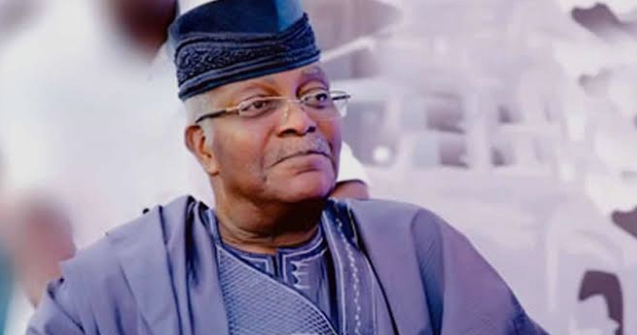
Brigadier-General Mobolaji Olufunso Johnson was the first Military Governor of Lagos State, but more than that, he was one of the men who laid some of the foundations upon which modern Lagos now stands.Born on February 9, 1936, in Lagos to Joshua Motola Johnson and Gbemisola Johnson, Mobolaji Johnson grew up in Yaba.
His early education began at Reagan Memorial Baptist School, followed by Yaba Methodist School. He later attended Hussey College in Warri before returning to Lagos, where he completed his secondary education at Methodist Boys’ High School, graduating in 1957.Beyond academics, Johnson was known to be athletic and even served as the athletics captain at Methodist Boys’ High School.
His service to the country and state began long before his position as governor.
He joined the Nigerian Army in 1958, becoming a Second Lieutenant in 1961, Lieutenant in 1962 and Captain later that same year. By February 1966, he had risen to the rank of Major.His rapid progress in the military was undeniable, but his interest in the profession went beyond a career choice.
According to Johnson himself, it began with a photograph of his father in military uniform during his service in the Second World War.
That photograph, he explained, inspired his decision to become a soldier.He would go on to become a soldier, administrator, businessman and elder statesman whose life became deeply intertwined with the history of the city he called home.
Following the military coup of 1966, Johnson was appointed Military Administrator of the Federal Territory of Lagos. Upon the creation of Lagos State in May 1967, he became its first Military Governor.At the time, there was no established Lagos State bureaucracy waiting for him to inherit.
There was a new state to organise, communities to connect and a rapidly growing city to prepare for the future.His administration covered Lagos Island and Mainland, as well as the Ikeja, Ikorodu, Badagry and Epe divisions. Johnson later revealed that his administration worked with ministries responsible for areas including Health, Education, Justice, Trade, Local Government, Finance and Roads.
Despite the challenges of governing a newly created state, his administration placed considerable emphasis on infrastructure and administration.
Projects associated with his tenure included the Lagos–Badagry Expressway, Itoikin Bridge, roads across the new state and the reclamation of portions of the Bar Beach shoreline.
His administration also played an important role in laying the foundations of the Lagos State civil service.Nevertheless, Brigadier-General Mobolaji Johnson’s role in Lagos is not without controversy. The demolition of the historic Ajele Cemetery remains one of the most criticised aspects of his tenure.
It is a reminder that the Lagos of today, despite its many achievements, was not built without difficult and sometimes contested decisions.Although his administration ended in 1975, Brigadier-General Mobolaji Johnson did not disappear from public life.
He moved into the business sector, eventually becoming Chairman of Julius Berger Nigeria, while also contributing to environmental conservation and educational institutions. His name, image and contributions therefore continued beyond his years in government.
Although he died in 2019 at the age of 83, his legacy remains closely connected to the history of Lagos.His achievements even led to some foundational projects in the state being attributed to him.
One example is the Third Mainland Bridge. Although the bridge was not built during his administration, it is sometimes listed among the achievements associated with his tenure.
Johnson personally clarified the matter, explaining that the idea of a bridge linking the Mainland to Lagos Island had been considered during his administration but was not realised at the time because of funding constraints. The bridge was eventually completed under the military administration of Ibrahim Babangida.
Another example is the arrival of Julius Berger in Nigeria, which has sometimes been attributed to Johnson. Although he worked closely with the company and later became its chairman, Johnson explained that the company had originally come to Nigeria through an international tender for the construction of Eko Bridge.
His willingness to clarify these misconceptions offers an interesting perspective on his character. Beyond recognising the need for infrastructure such as the proposed Mainland–Island connection, he did not claim personal credit for projects that were ultimately completed after his administration or for developments that predated his involvement.
Looking back at his contributions to Lagos, one cannot help but consider what the city might have looked like if the foundations of its modern state government had not been laid when they were.
For eight years, Mobolaji Johnson was at the centre of that process. Long after he left office, Lagos continued to grow on foundations he helped build.