
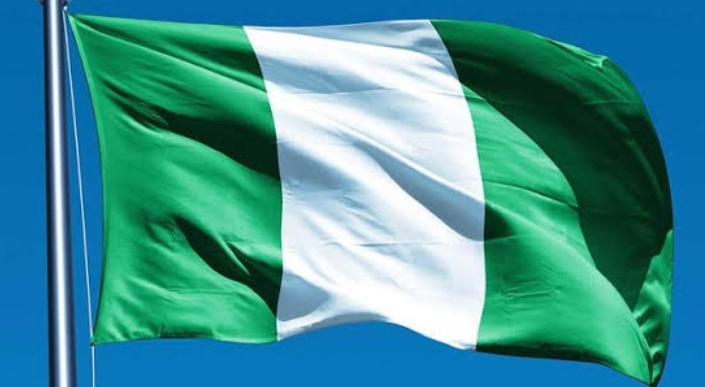
On October 1, 1960, Nigeria gained independence and three years later, became a Republic. There was an entire ceremony demonstrating the transfer of power to Nigerians and enabling self-governance, a beautiful memory for all who experienced it and a great fuel of patriotism for those taught about it. Nigeria truly attained independence then, but does that still stand?
In the literal sense of it, Nigeria was and still is a politically independent country, yet, when time becomes a factor to consider, the answer might change. Sixty-six years later, Nigeria is honored on the same day, October 1st, as an independent country but can we say the same for its citizens, Nigerians?
Viewing Nigeria beyond the geographical space, it is made up of people and to those people, independence can mean more than freedom from colonial rule. Asides the usual, basic human rights, it extends to freedom to speak without fear, to live without insecurity, to pursue opportunities without having to depend on connections, to choose leaders without intimidation and to move freely within and outside the country.In retrospect, it is easy to say that Nigerians are free since these rights are in a way or another, constitutionally backed up, yet, reality says otherwise as the experience of these rights can be more complicated.
For instance, the case of Abuja-based businesswoman and online bread reviewer Love Dooshima brought the issue into public conversation in April 2026.
Dooshima had posted a video reviewing a loaf of bread which she said had remained fresh for more than two months. Although she did not initially identify the manufacturer, Bon Bread identified itself as the brand in question and complained that the review was damaging its business. Dooshima was subsequently detained at the Zone 7 Police Headquarters after honouring a police invitation relating to the complaint. She was released in the early hours of the following day. Bon Bread, meanwhile, defended the safety of its products.
Although this occurrence in itself, does not assert that Nigerians lack freedom of speech, it highlights the tension that can arise between a citizen’s right to express an opinion and the consequences that may follow from exercising that right. S the problem is not the deprivation of right, no! It is the unspoken consequences that come with exercising such rights.
Human Rights Watch has documented arrests, detention and other pressures involving journalists, protesters and social commentators in Nigeria, including but not limited to cases linked to online expression.
Independence also carries an expectation of security, after all, one of the basic responsibilities of a country towards its citizens is security.
Insecurity remains one of Nigeria’s most persistent challenges. Human Rights Watch’s 2026 World Report documented continuous killings, kidnappings and violent raids across parts of the country during 2025. It reported that 2,938 people were kidnapped in Nigeria’s Northwest between July 2024 and June 2025 alone, according to SBM Intelligence.
The problem has also affected children and educational institutions. In addition to the Oyo state school kidnapping that had the attention of the country, in November 2025, armed men kidnapped 25 schoolgirls from a secondary school in Kebbi State. Days later, more than 300 students and teachers were abducted from St. Mary’s Catholic School in Papiri, Niger State. Such events, despite how appalling they are are too many to mention.
What then does independence mean without freedom? Nigeria is independent, but can the citizens say the same?
Another aspect to consider is the ability to choose representatives. Self-governance is the backbone of Nigeria’s independence, but for a sixty-six year old country that already ranks as a highly politically corrupt entity, does it maintain the stance?
Time after time, Nigerian elections have repeatedly faced concerns over violence, intimidation and other forms of interference.
During the 2023 general elections, Human Rights Watch documented incidents in which voters and election officials faced violence. In Lagos, for example, a voter, Bina Jennifer Efidi was attacked at a polling unit in Surulere, an incident that disrupted voting at the location.
Human Rights Watch also documented broader concerns about electoral violence and intimidation during the election period.
The existence of such incidents raises another question regarding independence. A citizen’s vote is supposed to represent choice but of what value is choice when it is motivated by fear or incentives.
Political participation is another measure of how citizens experience their independence, and in that case, how independent is Nigeria to it’s citizens?
It is highly important to note that the concept of independence changes as the world continues to develop. To a person who experienced the colonial period, independence might simply be freedom from colonial control, yet to others born outside of the period it could very well be the ability to exercise basic rights freely.
Usually, when looking back to sixty-six years ago, the topic of discussion is usually in relation to how far Nigeria has come, neocolonialism, politics, patriotism, among other topics, all of which in a way or the other are a progress report on the country. All of these are important, truly, but understanding independence from the perspective of the people who actually make up the country is essential as well.
It is from this understanding that internal change can begin, because it is the mentality that forms the visible actions. The perception of the citizens is a strong determinant of how much a country can develop.
The question therefore is not whether Nigeria is independent, it is rather a question of whether Nigeria has been able to adapt despite its independence, or better put, how independent is Nigeria to its citizens?